The 18th BRICS Summit is being held at Bharat Mandapam, New Delhi, on 12 and 13 September 2026, with India in the Chair for the fourth time in the grouping’s history. Eleven member countries, ten partner countries and a list of outreach invitees have converged on the capital — heads of state, ministers, sherpas, trade delegations, central bankers, business councils and the press corps that follows all of them.
Every one of those people has to get from an aircraft to a hotel, from a hotel to Bharat Mandapam, from a bilateral to a banquet, and back again — on time, in convoy, under protocol. That is ground transportation, and it is the part of a summit nobody notices unless it fails.
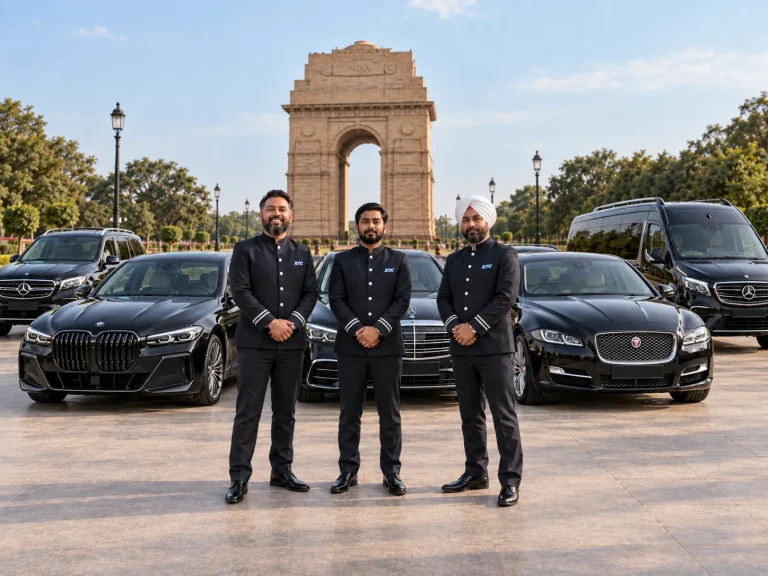
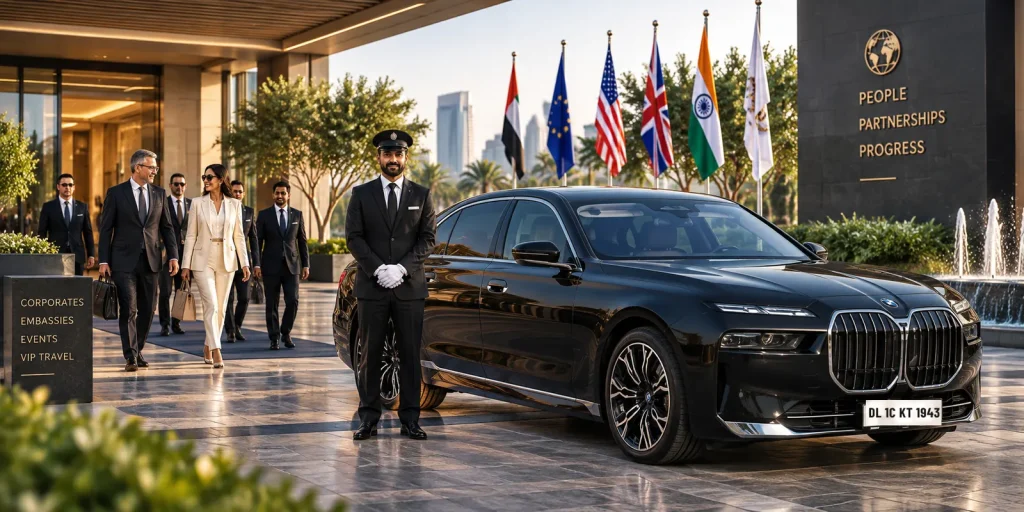
KTC India is proud to share that we have provided ground transportation for trade and official delegations at BRICS 2026, deploying over 300 vehicles across the summit period. It is the kind of work we have been doing quietly since 1943.
Membership and population share as of 2026; vehicle figure is KTC’s own deployment across the summit period.
What the 18th BRICS Summit is
BRICS began as an investment-bank acronym in 2001 and became a real grouping in 2009, when Brazil, Russia, India and China held their first leaders’ summit. South Africa joined in 2010 and gave the acronym its S. The bloc then sat at five members for thirteen years before the 2023 Johannesburg summit opened the door to expansion — and since 1 January 2025 it has carried eleven members and a second tier of ten partner countries.
India assumed the BRICS Chairship on 1 January 2026. The chairship is not a ceremonial year: under India’s presidency, more than 350 meetings and high-level engagements have been held in over 25 cities across the country in the run-up to this week, from sherpa tracks and finance-minister meetings to business-council sessions and academic forums. The New Delhi summit is where that year of work is signed off.
18th BRICS Summit
NEW DELHI · 12–13 SEPTEMBER 2026
Summit theme: “Building for Resilience, Innovation, Cooperation and Sustainability” — the initials spell BRICS.
Who is in BRICS in 2026
This matters for anyone planning delegation logistics, because the guest list is no longer five countries with predictable requirements. It is eleven members with very different protocol conventions, plus ten partner countries who attend key sessions, plus outreach invitees.
| Member country | Joined | Note |
|---|---|---|
| Brazil | 2009 | Founding member; hosted the 2025 summit in Rio de Janeiro |
| Russia | 2009 | Founding member; hosted the 2024 summit in Kazan |
| India | 2009 | Founding member; Chair and host in 2026 |
| China | 2009 | Founding member; largest economy in the bloc |
| South Africa | 2010 | Added the “S”; hosted the 2023 expansion summit |
| Egypt | 2024 | Joined in the first expansion round |
| Ethiopia | 2024 | Joined in the first expansion round |
| Iran | 2024 | Joined in the first expansion round |
| Saudi Arabia | 2024 | Joined in the first expansion round |
| United Arab Emirates | 2024 | Joined in the first expansion round |
| Indonesia | 2025 | Most recent full member |
Partner countries since 1 January 2025: Belarus, Bolivia, Cuba, Kazakhstan, Malaysia, Nigeria, Thailand, Uganda, Uzbekistan and Vietnam.
Taken together the eleven members account for roughly 49.5% of the world’s population and about 41% of global GDP measured at purchasing power parity — ahead of the G7’s 28% on the same measure, though still behind it in nominal dollar terms.
Purchasing-power-parity basis. On nominal GDP the ranking reverses; the two measures answer different questions.
The delegations KTC India has moved
Across BRICS 2026 and the engagements leading up to it, KTC India has provided chauffeur-driven ground transportation for trade and official delegations from:
BRICS member countries — Brazil, Russia, South Africa, Egypt, Ethiopia, Saudi Arabia, the United Arab Emirates and Indonesia.
BRICS partner countries — Kazakhstan, Thailand and Vietnam, among others.
We are not able to name every principal we carried, and we would not want to: discretion is most of the product. What we can say is that the pattern is familiar to us. KTC has run ground transport for the Indian Ministry of External Affairs, for embassies and high commissions posted in Delhi, and for corporate and sporting delegations arriving from overseas, for decades. A summit simply compresses a year of that work into seventy-two hours.
Why a company founded in 1943 keeps getting this call
Delegation transport is not won on price. It is won on whether the operator has done it before, owns the vehicles rather than brokering them, can absorb a schedule change at 2 a.m., and has chauffeurs who have been through police verification and protocol briefing rather than being sourced the week before. KTC India owns and maintains its own fleet, operates in 38 countries, and has over 200 vehicles on duty on an ordinary day — which is what makes a 300-vehicle surge possible at all.
Every category in the KTC fleet was on the road
People picture a summit fleet as a line of identical black sedans. It is nothing of the sort. A delegation arrives as a pyramid — a principal, a handful of senior officials, an advance and security team, interpreters and note-takers, a press pool, and support staff — and each layer needs a different vehicle. Put the press corps in sedans and your convoy is forty cars long. Put a minister in a people-mover and you have a protocol problem.
Which is why all six categories of our fleet were deployed across BRICS 2026, from the S-Class at the front of a convoy to the commuter sedans doing hotel runs at four in the morning. Here is what each category did.
1. Luxury cars — heads of delegation, ministers and ambassadors
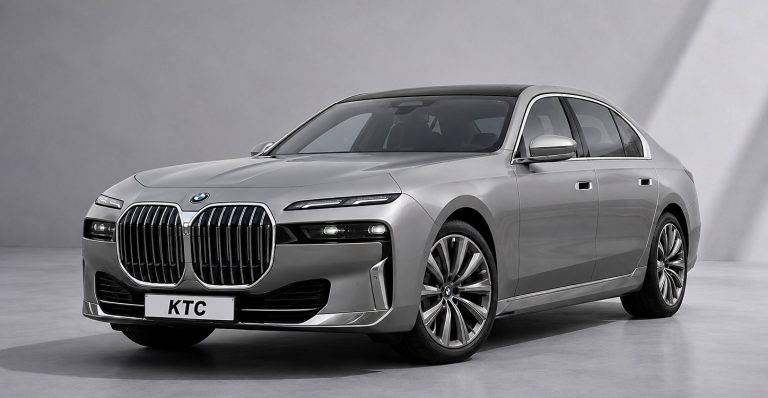
The protocol car. Our Mercedes-Benz S-Class, BMW 7 Series, Audi A8 L and Jaguar XJ L carried heads of delegation, cabinet-rank ministers and ambassadors. These are long-wheelbase cars for a reason: the rear cabin is the working space, and a principal who has landed from an eleven-hour flight reads briefing papers in it on the way to Bharat Mandapam. Colour, registration and chauffeur were fixed for the visit, so the same car met the same principal every morning.
2. Executive cars — senior officials, sherpas and delegation staff
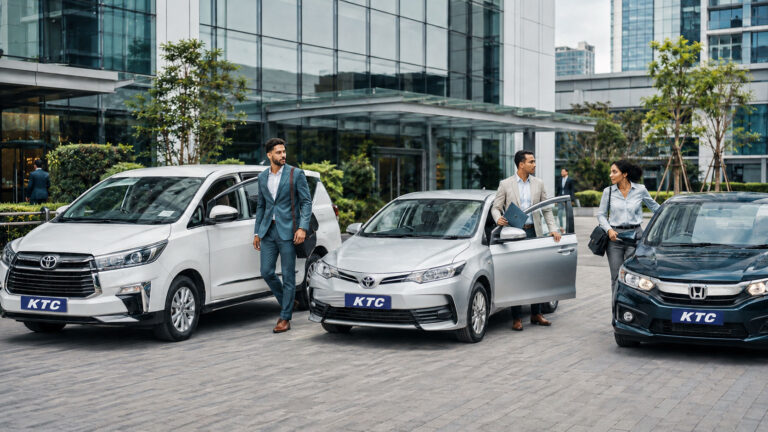
The volume class at any summit, because there are always more officials than principals. Mercedes E-Class, BMW 5 Series, Toyota Camry and Toyota Innova Crysta moved sherpas, joint secretaries, spouses and delegation staff between hotels, bilaterals and side events. Full-size comfort, but a class you can field thirty of at once without the fleet turning into a logistics problem.
3. SUVs — security details, advance teams and route cars
Every serious delegation travels with people whose job is to be somewhere before the principal is. Mercedes GLS and Toyota Fortuner from our SUV fleet ran advance and security details, carried equipment, and held position as route and follow cars in convoy. Ground clearance and a commanding seating position matter here far more than rear legroom.
4. Mini vans and people movers — teams that travel as one unit
The quiet workhorse of summit week. Mercedes V-Class, Toyota Vellfire, Kia Carnival, Mercedes Sprinter, Toyota Hiace, Force Urbania and Toyota Coaster moved trade delegations, technical teams and press pools as single units. One Sprinter replaces four sedans in a convoy, which is the difference between a motorcade that clears a junction on one signal and one that does not. The full range sits on our mini vans page.
5. Coaches and commuter vehicles — press corps, business councils and shift movement
Volvo large coaches and the wider coach fleet handled the movements nobody photographs and everybody depends on: media contingents to the venue, business-council attendees to side events, and hotel shuttles running on a fixed loop. Alongside them, our commuter fleet — Toyota Innova Hycross, Maruti Suzuki Ertiga, Maruti Suzuki Ciaz, Maruti Suzuki Dzire and Hyundai Aura — did the liaison-officer runs, document drops, staff shifts and airport pickups that go on around the clock for a week. This is the same fleet that runs our employee transportation contracts, and summit week is simply that operation at higher intensity.
6. Electric vehicles — the sustainability line, actually driven
The summit theme is “Building for Resilience, Innovation, Cooperation and Sustainability”. Sustainability is easy to put on a backdrop and harder to put on a road. Our EV fleet — MG ZS EV, MG Windsor EV, Kia Clavis EV, BYD eMax7 and Tata Tigor EV — ran city legs and shorter shuttle duties across the summit, which is exactly the duty cycle an EV is best at: predictable distances, known routes, charging windows between movements. Zero tailpipe emissions on the legs where the range maths works, and no compromise on the legs where it does not.
| Category | Vehicles deployed | Who they carried |
|---|---|---|
| Luxury cars | Mercedes S-Class, BMW 7 Series, Audi A8 L, Jaguar XJ L | Heads of delegation, ministers, ambassadors |
| Executive cars | Mercedes E-Class, BMW 5 Series, Toyota Camry, Innova Crysta | Sherpas, senior officials, spouses, delegation staff |
| SUVs | Mercedes GLS, Toyota Fortuner | Security details, advance teams, route and follow cars |
| Mini vans | V-Class, Vellfire, Carnival, Sprinter, Hiace, Urbania, Coaster | Trade delegations, technical teams, press pools |
| Coaches & commuters | Volvo coaches, Innova Hycross, Ertiga, Ciaz, Dzire, Aura | Media contingents, business councils, liaison and shift runs |
| EV cars | MG ZS EV, MG Windsor EV, Kia Clavis EV, BYD eMax7, Tata Tigor EV | City legs, shuttle duties, short-route movement |
Plus standby vehicles in every category, held in reserve and deliberately kept idle.
The category nobody books and every summit needs
Reserve capacity. A summit fleet with no spare is not a fleet, it is a bet. Standby vehicles and standby chauffeurs sat staged in every one of the six categories above, so a breakdown at a venue gate, a delegation that split in two, or a bilateral added at short notice could be absorbed without a phone call reaching the principal. Most of them never moved. That is the point of them.
Every vehicle named above is owned and maintained by KTC, not brokered on the day. The complete list, with specifications and seating, is on our fleet page.
How a summit movement is actually run
The visible part is a car arriving. The work happens in the fortnight before.
Route recce and timing runs
Every airport-to-hotel and hotel-to-venue leg is driven at the actual hour it will be needed, not at midday. Delhi at 08:40 and Delhi at 14:00 are different cities.
Vehicle allocation against protocol rank
Car class is assigned to the delegation list, not handed out on arrival. Getting this wrong is a diplomatic problem, not a logistics one.
Chauffeur vetting and briefing
Police verification, passes, route familiarisation, protocol conduct, and a named chauffeur locked to a named vehicle for the whole event.
Marshalling and staging
Vehicles are staged at the venue and hotels in convoy order hours ahead, cleaned, fuelled and checked, so nothing is retrieved from a car park under pressure.
Live control room
One desk holds the whole fleet picture and talks to liaison officers. Changes come constantly; the point is that they reach every affected driver at once.
Reserve capacity on standby
Spare vehicles and spare chauffeurs sit idle by design. A breakdown or a split delegation has to be absorbed without a phone call to the principal.
Delegation transport is not corporate car hire
Both involve a good car and a chauffeur. Almost nothing else is the same, and companies that treat the two as interchangeable find out during the event rather than before it.
What a delegation fleet must have
- Vehicles owned and maintained by the operator, not sub-contracted on the day
- Chauffeurs police-verified and briefed on protocol and route
- Standby vehicles costed in from the start
- A control room, not a WhatsApp group
- Same car, same chauffeur, for the full visit
- Confidentiality treated as a deliverable
What goes wrong without it
- A brokered vehicle turns up in the wrong class or colour
- A driver who has never done the route in convoy
- No spare car when one fails at the venue gate
- Schedule changes reaching half the fleet
- A new face at the wheel every morning
- Photographs and itineraries where they should not be
The week, from our side
Requirement lock and recce
Delegation sizes, arrival windows and venue passes are confirmed; routes are driven and timed.
Fleet preparation
Vehicles are pulled from service, inspected, detailed and held. Chauffeurs are assigned and briefed.
Airport reception
Meet-and-greet at the terminal, luggage handled, convoy departs as a unit rather than as individual cars.
Venue shuttling and bilaterals
Continuous movement between hotels, Bharat Mandapam and side venues, with vehicles on standby between legs.
Phased outbound
Departures are staggered against flight times and airport congestion, with the last car released only when the last delegate is airside.
If you are planning a summit, conference or state visit
The requirements above scale down as well as up. A twelve-person trade mission needs the same discipline as a 300-vehicle summit fleet; it just needs fewer cars. If you are organising an inbound delegation, an embassy visit, a conference or a corporate roadshow across Indian cities, the relevant pages are VIP delegation transport, global events and delegations, and car rental for events and conferences.
For day-to-day requirements in the capital, see luxury car rental in Delhi, or our chauffeur-driven cars and coaches across India. We operate in 38 countries, so a delegation that lands in Delhi and continues to Dubai, Singapore or London does not need a second supplier.
Frequently asked questions
When and where is the 18th BRICS Summit being held?
The 18th BRICS Summit is being held on 12 and 13 September 2026 at Bharat Mandapam, Pragati Maidan, New Delhi. India assumed the BRICS Chairship on 1 January 2026, its fourth time chairing the grouping.
Which countries are in BRICS in 2026?
Eleven full members: Brazil, Russia, India, China, South Africa, Egypt, Ethiopia, Iran, Saudi Arabia, the United Arab Emirates and Indonesia. Ten partner countries also take part in key sessions: Belarus, Bolivia, Cuba, Kazakhstan, Malaysia, Nigeria, Thailand, Uganda, Uzbekistan and Vietnam.
How many vehicles did KTC India provide for BRICS 2026?
Over 300 vehicles across the summit period, and every one of the six categories in our fleet was deployed: luxury cars (Mercedes S-Class, BMW 7 Series, Audi A8 L, Jaguar XJ L) for heads of delegation; executive cars (Mercedes E-Class, BMW 5 Series, Toyota Camry, Innova Crysta) for senior officials; SUVs (Mercedes GLS, Toyota Fortuner) for security and advance teams; mini vans and people movers (V-Class, Vellfire, Carnival, Sprinter, Hiace, Urbania, Coaster) for delegations and press pools; coaches and commuter vehicles (Volvo coaches, Innova Hycross, Ertiga, Ciaz, Dzire, Aura) for media contingents and shift movement; and EVs (MG ZS EV, MG Windsor EV, Kia Clavis EV, BYD eMax7, Tata Tigor EV) for city legs — plus standby vehicles held in reserve in every category.
Which delegations did KTC India move?
Trade and official delegations from Brazil, Russia, South Africa, Egypt, Ethiopia, Saudi Arabia, the United Arab Emirates and Indonesia among BRICS members, and from partner countries including Kazakhstan, Thailand and Vietnam, alongside others we are not at liberty to name.
Which categories of vehicle does KTC operate?
Six: luxury cars, executive cars, SUVs, mini vans and people movers, coaches and commuter vehicles, and electric vehicles — 29 models in all, owned and maintained by us rather than brokered. The full list with specifications is on our fleet page.
Do you provide transport for embassies and government delegations outside summit weeks?
Yes. Embassy, high commission and ministry work is a standing part of what we do in Delhi NCR and across India, from single airport transfers to multi-city ministerial tours. See VIP delegation transport.
How far in advance should delegation transport be booked?
For a summit or state visit, four to six weeks is comfortable and two weeks is workable. What matters more than notice is how early the delegation list and arrival windows are confirmed, because vehicle class is allocated against protocol rank rather than assigned on the day.
Can KTC handle a delegation that travels to several countries?
Yes. KTC operates in 38 countries, so an inbound delegation to India that continues to the UAE, Saudi Arabia, Singapore, the United Kingdom or elsewhere can stay with one operator, one point of contact and one standard of vehicle. See our global presence.