

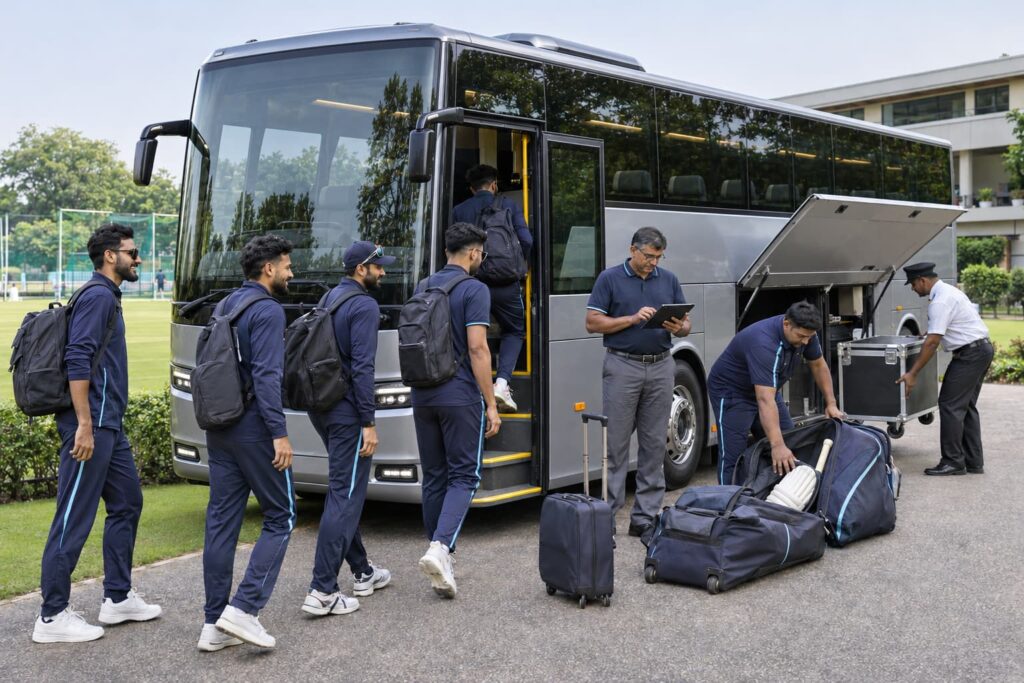
Team travel logistics decide how a squad feels before the first ball. On match day, the team bus is part of the fixture. Players step off it in front of cameras and fans, and the warm-up clock starts the moment they arrive. If the coach runs late, everything behind it slips.
This guide breaks down what team transport really involves and how to plan it for a season, a series or a single tournament.
A Team Is Not One Group
The biggest planning mistake is treating a team as one busload. In practice, a squad on tour moves as several streams:
- Players, who travel together between the hotel, training ground and stadium
- Coaching, medical and analysis staff, who often leave earlier or later than players
- Kit and equipment, which is bulky, valuable and cannot run late
- Management, officials and VIP guests, who need separate cars
- Media, sponsors and broadcast crew, who work around fixtures on their own timelines
KTC’s services cover this range, from team coaches with kit capacity to matchday transfers for officials, media and VIP guests, across India and worldwide.
Team Travel Logistics for Tournaments
Tournaments raise the difficulty. Several teams may share one city, one hotel or one stadium. Fixtures move for weather or broadcast reasons. Travel days squeeze between match days.
Good tournament planning follows a few principles:
- One dedicated coach per team. The same vehicle and driver across the event build routine and trust.
- Fixed daily run sheets. Every departure goes on a shared schedule, confirmed each evening.
- Separate kit logistics. A support van carries equipment when the coach is full or when kit must reach the ground first.
- Standby vehicles. A spare car or van covers injuries, medical visits and last-minute changes.
- One contact per side. The team manager and the transport coordinator talk directly.
A Typical Matchday Movement Plan
Here is how a matchday often runs for a visiting team:
| Time block | Movement | Vehicle |
|---|---|---|
| Morning | Staff and analysts to the stadium | Car or van |
| Morning | Kit and equipment to the dressing room | Support van |
| Pre-match | Squad from hotel to stadium | Team coach |
| Match | Officials, VIPs and guests to the venue | Luxury sedans |
| Post-match | Media duties, then squad to hotel | Team coach, with a car on standby |
| Late night | Recovery trips or medical visits if needed | Standby car |
The exact times depend on the sport, venue rules and the broadcast slot. Share the match schedule with the transport team as soon as it is final.
Airport Arrivals and Departures
Teams rarely travel on one flight. Players join from national duty, other leagues or home cities at different times. Each arrival needs a pickup, and luggage often includes oversized kit bags.
For airport runs, provide flight numbers and passenger names for every arrival. Vans and people movers usually suit small arrival groups, while a coach works for the main squad flight. For departures, plan the airport run around check-in rules for sports equipment, which can take longer than standard baggage.
The airport transfer service handles pickups and drops at major airports.
Training Days Need Transport Too
Match days get the attention, but training days create more trips. Squads may train twice a day, visit a gym or pool, and attend media sessions. These trips usually run on tight windows around meals and recovery.
Keep the same coach and driver on training days. Players settle into a routine, and the driver learns the fastest route between the hotel and training venues.
Choosing Vehicles for Sports Groups
- Coaches for the full squad, with luggage space for kit bags
- Mini coaches or vans for staff groups and smaller squads
- Support vans for equipment runs
- Luxury sedans for team owners, officials and VIP guests
For large squads and support staff, a Volvo coach rental offers one vehicle for the whole group. For VIP guests at the ground, chauffeur-driven luxury cars keep hospitality movement separate from team logistics.
Lessons From Professional Cricket
KTC India has published an account of supplying coaches for Major League Cricket in the United States, covering squad transfers, kit logistics and matchday timing. The article explains why running a team bus over a compressed season is mainly a scheduling problem, and why contingency vehicles matter when weather or overruns change the plan. You can read it in the cricket team transport case study.
School, College and Amateur Teams
Not every team is professional. School and college teams, club sides and corporate sports groups also travel for tournaments. Their needs are similar but often simpler, with tighter budgets and younger passengers.
For student teams, safety and supervision come first. Share the full passenger list, including coaches and chaperones, and confirm that the group travels together. Plan pickups and drops at school or campus gates rather than on busy roads. For overnight trips, agree on rest stops and arrival times with parents and staff before the team leaves. Keep an emergency contact list on board.
Multi-City Tours and Series
Some teams play in several cities over a few weeks. A cricket series, a football tour or a multi-venue tournament creates a sequence of airport arrivals, hotel stays, training days and match days in each city.
For multi-city tours, keep one central plan with separate sections for each city. Share each city’s schedule with the local transport team well ahead. Confirm how kit will move between cities, since heavy equipment may travel separately from the squad by road or air cargo. Assign one person to track every flight and train change across the tour.
Sporting events also involve sponsors, officials and VIP guests. Read about luxury event transportation for VIP guests and corporate events for ideas on managing that side of the day.
Weather and Contingency Planning
Weather can change a sports schedule quickly. Rain delays, heat breaks and rescheduled fixtures all affect transport. Keep standby vehicles ready on match days, and agree on how the team manager will share changes with the transport coordinator.
In hot conditions, keep coaches cool before players board and stock water on board. In rain, plan covered drop points at stadiums and hotels, so players and kit stay dry. Share weather updates in the team group each morning.
Fan, Sponsor and Hospitality Movement
Large sporting events also move sponsors, hospitality guests and sometimes fan groups. These guests expect comfort and punctuality but follow a different schedule from the team. Keep hospitality transport separate from team transport, with its own coordinator and vehicles. This avoids delays for players if a sponsor event runs late. Plan drop points close to hospitality entrances.
Kit Transport for Sports Teams: Sizing the Vehicles
Kit volume often decides the vehicle plan more than headcount. Cricket bags, hockey sticks, football kits, medical supplies and analysis equipment take up a lot of space. A coach may seat the whole squad but still lack room for every bag.
Before the tour, ask the team manager for a kit count and rough sizes. If the coach’s luggage bay cannot hold everything, add a support van. This also lets kit reach the ground before the squad, so the dressing room is ready on arrival.
Keep valuable equipment, such as laptops and medical kits, with the staff who need them rather than in the main luggage bay. Label bags clearly so unloading at the stadium goes quickly. Recount the kit after each match, since bags can go missing in a busy dressing room.
Planning Checklist for Team Managers
- Squad list with roles and arrival flights
- Hotel, training venues and stadium locations
- Match and training schedule, including broadcast times
- Kit volume and any oversized equipment
- Number of VIP and official cars needed
- Contact person for daily changes
For coaches and support vehicles, see sports team transportation.
Organising a team tour or tournament? Send your squad size, fixture list, venues and kit requirements to enquiry@ktcindia.com or call +91 11 425 88 888 to plan coaches and support vehicles.
Frequently Asked Questions
What vehicle works for a sports team travelling with equipment?
A coach with luggage space suits the squad, while a separate support van carries bulky or valuable kit.
How do you plan transport for a sports tournament?
Assign one coach per team, share a daily run sheet, add a kit van and keep standby vehicles for changes.
Can team transport cover airport pickups for players on different flights?
Yes. Share flight numbers and names for every arrival, and smaller vehicles can collect players who land separately.
How much does team bus hire cost?
The cost depends on the number of vehicles, days, distances and schedule. Share the fixture list for an accurate quote.
Do sports teams need separate cars for officials and guests?
Usually, yes. Separate luxury cars keep VIP and official movement from delaying the squad’s schedule.