
The 29th Bengaluru Tech Summit runs from 17 to 19 November 2026 at the Bangalore International Exhibition Centre (BIEC) on Tumkur Road, under the theme “AI & Beyond”. The organisers — the Government of Karnataka’s Department of Electronics, IT and Biotechnology, with KITS, STPI and MM Activ — are expecting more than 1,600 exhibitors, participation from over 60 countries and delegations from 25 Indian states.
Here is the part nobody puts on the brochure: BIEC is on the north-western edge of the city, and almost everyone attending sleeps somewhere else. Whitefield, Outer Ring Road, Koramangala, MG Road, Electronic City — every one of those is a long, unpredictable run to Tumkur Road on a weekday morning. The summit is three days; the transport plan is what decides whether your team spends those days in sessions or in traffic.
This guide covers the BIEC distance problem, how to build shuttle loops that survive Bengaluru peak hours, which vehicles suit which group, and what to lock down with a transport vendor before November.
Bengaluru Tech Summit 2026
BIEC, TUMKUR ROAD · 17–19 NOVEMBER 2026
Scale figures as published by the summit organisers for the 2026 edition.
The BIEC problem, stated plainly
BIEC sits at the 10th Mile on Tumkur Road (NH-48), north-west of the city. Bengaluru’s technology employment, and therefore most of its hotel demand, sits east and south — Whitefield, Marathahalli, Bellandur, Sarjapur, Electronic City. The summit therefore asks tens of thousands of people to cross the city every morning against the grain of normal commuting, and then to cross back in the evening.
The numbers below are what we plan against. The wide end of each range is not pessimism; it is a Tuesday in November with rain on the Outer Ring Road.
| From | Approx. distance | Off-peak | Peak |
|---|---|---|---|
| Yeshwanthpur / Malleshwaram | 12–16 km | 25–35 min | 45–70 min |
| Kempegowda International Airport | 35–45 km | 45–60 min | 75–110 min |
| MG Road / CBD hotels | 22–26 km | 45–60 min | 75–110 min |
| Koramangala / Indiranagar | 28–33 km | 55–75 min | 95–140 min |
| Outer Ring Road (Marathahalli, Bellandur) | 35–42 km | 70–90 min | 120–150 min |
| Whitefield | 45–50 km | 85–105 min | 130–170 min |
| Electronic City | 45–52 km | 85–105 min | 130–170 min |
Indicative planning ranges from our own Bengaluru runs. Summit-week volumes at the BIEC approach add to the last two kilometres.
The single decision that saves your summit
Move your delegation’s hotel to the north-west — Yeshwanthpur, Malleshwaram, Rajajinagar, Hebbal or the airport corridor — or accept that an ORR or Whitefield hotel costs each delegate three to four hours a day in a car. If the hotel is already booked in the east, build the day around one early departure and one late return rather than letting people travel individually whenever they finish a session.
Build loops, not point-to-point trips
The instinct is to book a car per person. At BIEC that produces a queue of cars at the gate, a parking problem and an invoice full of waiting hours. Delegations that run well use a small number of shuttle loops with a handful of chauffeur-driven cars reserved for people whose timings cannot be pooled.
Two morning waves, not one
An early wave for exhibitors and speakers, a second for general delegates. One 49-seat coach on two waves beats fourteen cars leaving at random.
A midday car on standby at the venue
One or two cars parked at BIEC cover the unplanned trips — a partner meeting in the city, a hotel run, an airport dash — without pulling a shuttle off its loop.
Evening returns at two fixed times
One departure at the close of sessions, one after the networking hours. Anything else becomes a taxi queue on Tumkur Road at 20:00.
Airport runs off the loop
Arrivals and departures are separate vehicles with flight-time buffers, never a shuttle that is due back at the venue.
One control number for the week
Delegates message one desk, not seven drivers. Changes reach the whole fleet at once.
Which vehicle for which group
A tech summit has a wider mix of travellers than a diplomatic event: founders, engineers, investors, government delegations and stand crews, all with different timings and luggage.
| Who is travelling | Vehicle | Why |
|---|---|---|
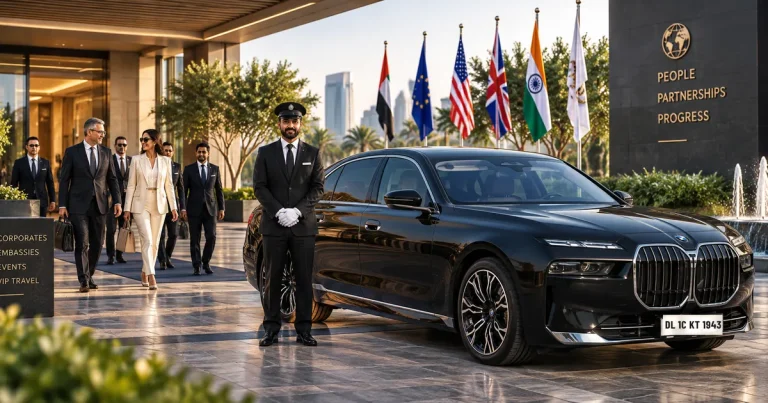
| Ministers, CXOs, international principals | Mercedes S-Class, BMW 7 Series | Car held all day; the vehicle becomes the mobile office between sessions |
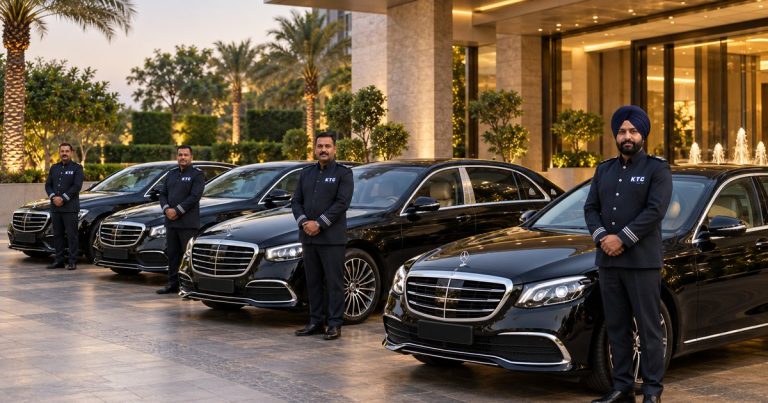
| Speakers and senior executives | Mercedes E-Class, Toyota Camry | Executive travel without a convoy footprint |
| Investor and founder groups of three to six | Mercedes V-Class, Toyota Vellfire | A meeting can continue during a 90-minute run |
| Company teams and delegation staff | Toyota Innova Crysta | Six or seven with laptop bags and demo kit |
| Stand crews, bump-in and strike | Force Urbania, tempo travellers | Crew plus equipment at hours the public programme does not cover |
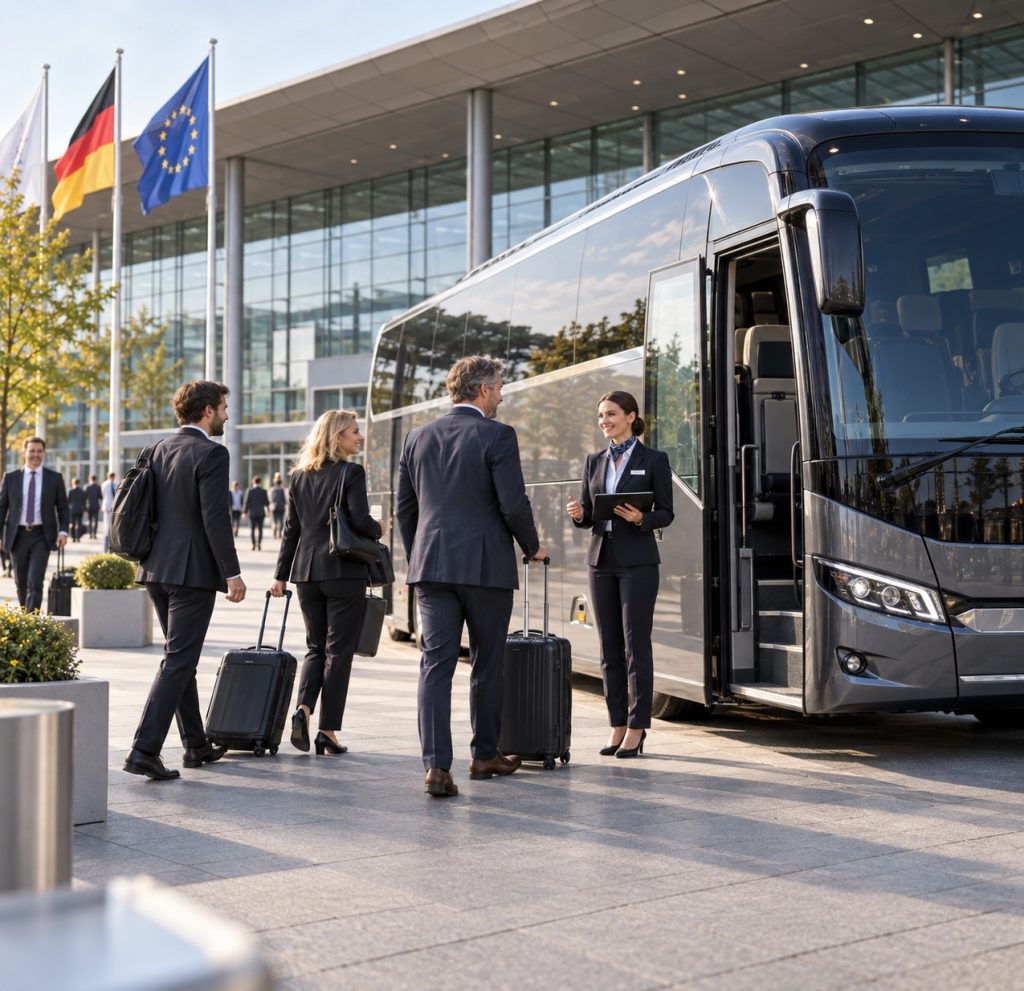
| State delegations, student groups, staff shuttles | Volvo coaches, commuter buses | One vehicle replaces a dozen cars on the BIEC approach |
| Sustainability-linked programmes | Electric vehicles | Available with charging planned around the run sheet, not improvised |
Exhibitors: your transport week starts before the summit does
If you are exhibiting at BTS 2026, your movement begins two days before the doors open and ends the night the stand comes down. Bump-in traffic on Tumkur Road, equipment that will not fit in a sedan, and crews working past midnight are all normal, and all need to be in the plan rather than solved by phone at 23:00.
Bump-in
Crew and equipment vehicles to BIEC, often outside the public hours, with waiting time built into the booking.
Stand build and rehearsal
Shorter crew runs, plus the first arrivals of speakers and senior staff from the airport.
Opening day
Earliest morning wave, heaviest approach traffic, standby car at the venue from the first session.
Summit days
Two waves in, two waves out, standby cover for meetings in the city and late networking.
Night movement
Stand strike runs late; airport departures are staggered against flight times rather than the closing ceremony.
What to settle with a transport vendor
Agree this in writing
- Owned vehicles, not vehicles brokered on the morning
- Standby cars and standby chauffeurs, costed in
- Named chauffeur held for the delegation across all three days
- Waiting time, night hours and the BIEC parking arrangement
- A control desk that answers at 05:30 and at midnight
- One invoice for the week, reconciled against the run sheet
What happens otherwise
- Aggregator cancellations at 07:30 on opening morning
- Surge pricing on every return leg from Tumkur Road
- A different driver who does not know the gate or the pass
- Crew stranded after a late strike with no vehicle on call
- Delegates paying for their own cabs and claiming them later
- Waiting hours nobody agreed, appearing on the invoice
Why KTC India
We have run ground transport in India since 1943 and operate our own fleet rather than brokering one, which is what makes summit-week surges possible. In Bengaluru we handle corporate employee transport contracts through the year, which means our chauffeurs already drive the ORR, Whitefield and Tumkur Road corridors daily — on summit week that route knowledge is the product.
For BTS week the relevant services are event and conference transport, coach shuttles, airport transfers and chauffeur-driven cars in Bengaluru.
Booking and lead time
November is peak season in Bengaluru: summit week overlaps with wedding season and the year-end corporate calendar, and coaches commit earliest because there are fewer of them than there are sedans. Four weeks out is comfortable for a mixed fleet with shuttles; two weeks out, you are choosing from what is left.
Chauffeur-driven luxury cars start at ₹15,000 + GST for a 4-hour / 40 km package, with executive sedans, Innova Crysta, Urbania and coaches below that. Multi-day summit fleets are quoted against the run sheet, because standby hours and night movement matter more than kilometres.
Send us delegate numbers, hotel locations and session timings and we will come back with a costed shuttle plan. The reservations desk is on +91 11 4258 8888, 24×7, or use the enquiry form.
Frequently asked questions
When and where is the Bengaluru Tech Summit 2026?
The 29th Bengaluru Tech Summit runs from 17 to 19 November 2026 at the Bangalore International Exhibition Centre (BIEC), 10th Mile, Tumkur Road, Bengaluru, on the theme “AI & Beyond”.
How far is BIEC from Kempegowda International Airport?
Roughly 35 to 45 km depending on the route. Allow 45 to 60 minutes off-peak and 75 to 110 minutes during peak hours or in rain.
How long does it take to reach BIEC from Whitefield or Electronic City?
Plan on 85 to 105 minutes off-peak and up to two and a half hours in peak traffic from either. This is the main reason delegations staying in the east move to two fixed departures a day rather than travelling individually.
Is a coach shuttle better than individual cabs for a summit delegation?
For groups above about eight people, yes. A coach on two waves costs less than a dozen cars, removes the queue at the venue approach and keeps the group together. Chauffeur-driven cars are then kept for speakers and executives whose timings cannot be pooled.
Can you support exhibitor crews during bump-in and stand strike?
Yes. Crew vehicles such as Urbania and tempo travellers are scheduled around the build and strike hours, including late-night movement, with waiting time agreed in advance.
How far in advance should we book for summit week?
About four weeks for a mixed fleet with shuttles. Coaches and people movers commit first; sedans hold availability slightly longer.
Do you provide transport for international delegations attending BTS?
Yes, including airport reception, multi-day chauffeur allocation and vehicles matched to protocol requirements for state and ministerial delegations.