
A fleet sounds easy until the maintenance bills start rolling in. Corporate fleet leasing in India is a smarter way of managing employee daily commutes and executive travel without getting hands dirty with a workshop or insurance renewal form.
The real essence of Corporate Fleet Leasing India
Fleet leasing is when a business can use vehicles for a set period of time but not actually own them. The leasing partner deals with the insurance, servicing, breakdown support, and replacement vehicles. The company pays a monthly fee and gets on with its core work.
This model can be used by companies of all sizes, from a start-up hiring its first employees to a large enterprise with hundreds of employees across multiple cities. One of the biggest reasons companies are moving away from vehicle ownership is the ability to scale up or down as headcount changes.
Why companies are shedding vehicle ownership
A fleet ties up capital that could be used for growth. Depreciation, maintenance costs, and driver management are distractions from the core business, and most finance teams would rather keep vehicles entirely off the balance sheet.
This weight is totally eliminated by leasing. One invoice a month for the vehicle, the driver, and every maintenance requirement, making it so much easier for procurement teams to budget. Off-balance sheet financing options also allow companies to clean up their books during audits and funding rounds.
The problem of scale is also there. A company opening a new city doesn’t have to buy vehicles locally. It’s just a matter of adding the new office to its existing lease agreement, so the process is the same for each office.
Employee Mobility: Fleet Leasing’s Everyday Backbone
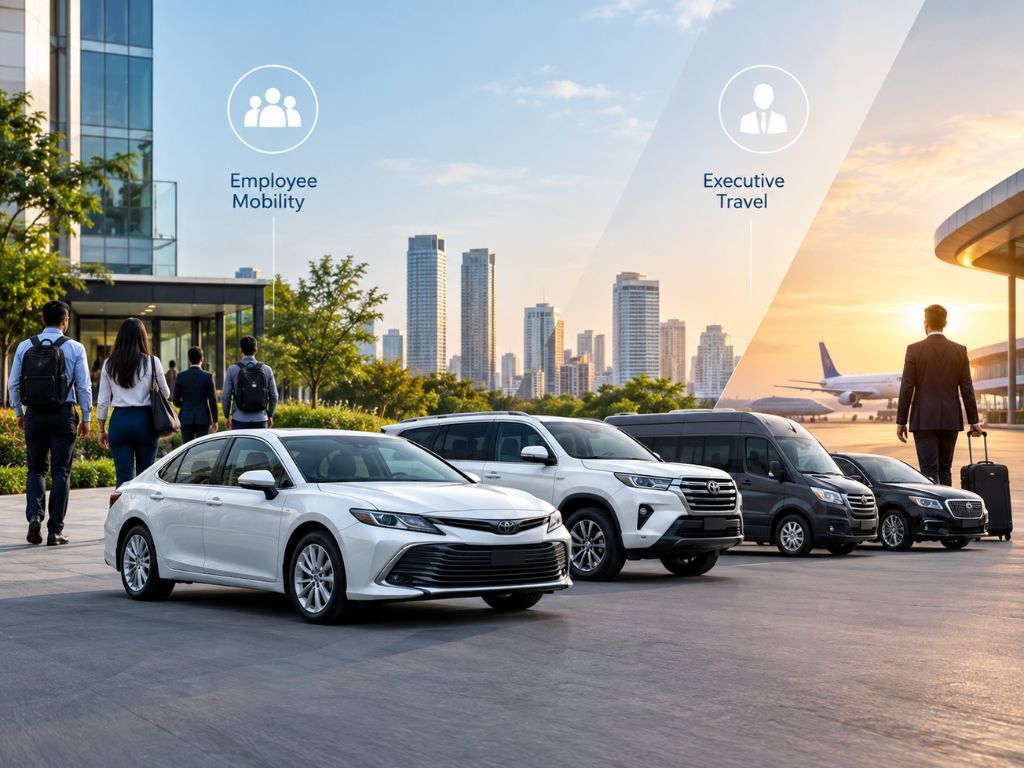
The bulk of most corporate fleet needs is daily employee transport. Reliable vehicles that run on time, every single day, are required for staff shuttles, night shift pickups, and office commute routes.
The fleet that is leased for employee mobility is usually a mix of sedans and minivans, depending on the length of the route and the number of heads. The biggest beneficiaries are companies with rotational shifts where a leasing partner can plan routes based on shift timings, rather than having to adjust employees’ schedules.
Safety is also a bigger factor than most companies expect. Background-checked drivers, GPS-tracked vehicles, and regular maintenance checks help reduce the risk involved in planning your daily commute, especially for those late-night shifts.
Executive Travel—A Whole Different Class
Senior leadership travel is held to a different standard. Executives require privacy, punctuality, and a car that suits the company’s status when dealing with clients or partners.
Leased executive cars usually consist of premium sedans and luxury SUVs, along with a dedicated chauffeur who is familiar with the executive’s schedule and preferences. Such consistency is important during high-stakes weeks, like investor meetings or client visits, when a delay is not an option.
Many companies also keep a small fleet of luxury cars that they only lease for visiting clients or board members. This separates day-to-day employee transport from executive travel so that both fleets can operate efficiently and without overlap.
Corporate Car Lease in Bangalore and the Surge of Tech Hub Demand
Corporate car lease in Bangalore has seen a steep growth with the increase of IT parks and startup campuses across the city. For firms with large tech teams, traffic in places like Whitefield and Electronic City means they need to plan transport well.
Most companies in Bangalore operate a fleet of shuttle vehicles to ferry staff daily from their homes to the office and premium sedans for the travel of senior leadership between clients’ offices. A leasing partner that knows the city’s traffic corridors can create routes that truly save time on the commute, rather than using a generic template.
Important Factors to Consider When Choosing a Leasing Partner
Not all leasing providers offer the same service, so a thorough evaluation will save headaches down the road. Start by looking at what is actually included in the lease, as some providers will charge extra for maintenance or replacement cars, while others include these as standard.
Also check about the flexibility of lease tenure. Some businesses have short-term projects and need shorter lease terms, while others have long-term expansion plans and benefit from multi-year contracts with locked-in rates.
Lastly, verify that the provider has experience working with companies of similar size. A leasing partner with experience in large corporate accounts will have processes for GST-compliant billing, SLA reporting, and multi-city coordination.
Cost Effectiveness Without Compromise
A common concern about leasing is if the savings in cost are at the expense of the quality of the vehicle. Most of the time, the opposite is true, with leasing partners more diligent about maintaining their vehicles to protect the value of their own fleet.
Companies also save on hidden costs that ownership rarely considers, such as driver recruitment, uniform allowances, and vehicle depreciation. The costs are rolled into a single lease payment, so budgeting is much more predictable from one financial quarter to the next.
KTC India: Customized for Corporate Fleet Needs
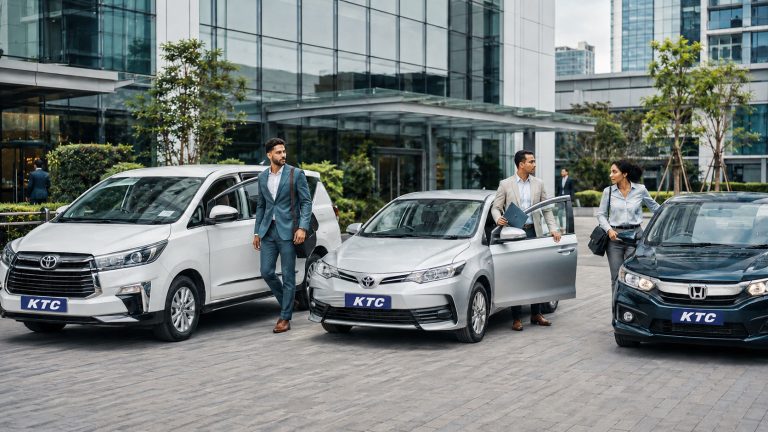
KTC India has supported corporates, embassies, and senior executives in their long-term car lease programs from six months to five years. They offer off-balance sheet financing options, GST-compliant consolidated billing, and a dedicated account manager for each of their corporate clients.
More than just vehicles are available to businesses that lease through an experienced provider. They get a partner who handles insurance, servicing, and replacement vehicles as part of the standard agreement, removing the operational burden from internal teams completely.
Transitioning from Ownership to Leasing, Smoothly
The transition from an owned to a leased fleet should be gradual rather than all at once. Begin by leasing new vehicles to meet the needs of growth, and retire older owned vehicles as they reach the end of their useful life.
Ensure that employees who depend on daily transport are clearly informed of the change so that the transition period does not disrupt commute schedules with a smooth handover. Most leasing partners help out with this changeover, arranging pickup points and driver assignments ahead of the switch coming online.
Common Fleet Leasing Mistakes Companies Make
Some companies lease vehicles without first mapping out their actual route needs. This leads to mismatched vehicle sizes and wasted capacity. If you take time to study commute patterns before signing a lease, you can avoid this problem entirely.
Another common mistake is to miss the lease flexibility clauses. If you skip this step, you will have problems when headcount fluctuates abruptly, as unflexible contracts make it harder to add or delete vehicles mid-term.
Corporate Fleet Leasing India Conclusion
In India, leasing a corporate fleet provides organizations an efficient way to address day-to-day employee mobility and important executive travel needs without the burden of ownership. The right leasing partner brings together maintenance, insurance, and driver management, freeing up your internal teams to focus on the business itself.
Beyond executive fleet needs, an established leasing partner can also offer premium executive cars for leadership travel to companies looking at employee transportation services. Get the fleet strategy right early to reduce cost and coordination effort as the business grows.
FAQs
What does a corporate fleet lease package include?
Most leasing packages include the car, a trained chauffeur, insurance, servicing, and roadside assistance in one monthly payment. Replacement vehicles are usually provided during servicing so that normal operations are not interrupted.
How long are corporate lease terms?
Business needs vary, and corporate lease terms are typically six months to five years. Companies with short-term projects tend to prefer shorter terms, while companies with long-term expansion plans tend to prefer multi-year contracts with locked-in rates.
Are leasing companies capable of multi-city corporate deployments?
Yes, there are established leasing companies that operate fleets across multiple cities in India on a single contract. This means consistent billing, service, and reporting no matter the location.
Is fleet leasing more cost-effective than vehicle ownership?
If all ownership costs, including depreciation, driver recruitment, and repair costs, are taken into account, leasing is often cheaper. Most of these costs are covered by a single lease payment, making it easier for finance teams to budget.
Is GST-compliant billing for corporate fleet leasing?
Yes, most of the corporate leasing providers will provide GST-compliant invoices and support consolidated monthly billing across vehicles and cities. It makes expense reconciliation and audit preparation much easier for procurement teams.